
Understanding Overthinking: Breaking the Cycle of Endless Thoughts
Overthinking can trap us in a cycle of worry, self-doubt, and emotional exhaustion. Learn why it happens, how it affects your mental health, and practical ways to regain control.
Dr. Malveeka Rao
Published on 17 July 2026
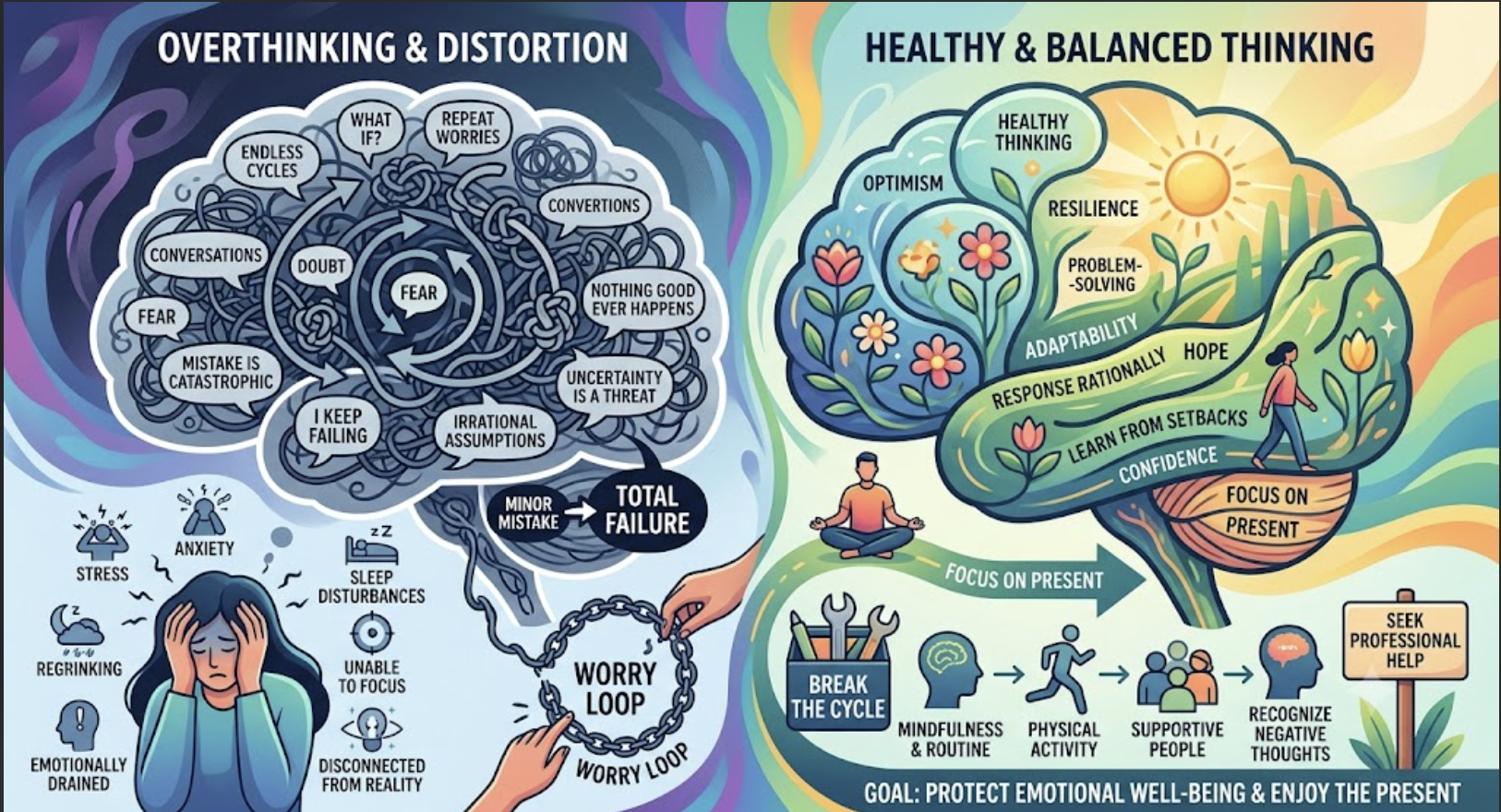
Overthinking is something almost everyone experiences at some point in life. It begins as a normal thought process, helping us analyze situations and make decisions. However, when our minds repeatedly revisit the same worries, conversations, or possibilities without reaching a conclusion, thinking becomes overthinking. Instead of solving problems, it traps us in a cycle of doubt, fear, and mental exhaustion.
Healthy thinking helps us understand our experiences and respond rationally to challenges. Overthinking, on the other hand, distorts our perception of reality. It convinces us that every mistake is catastrophic, every uncertainty is a threat, and every negative possibility is likely to happen. This endless cycle leaves us emotionally drained and unable to focus on the present.
Our thoughts generally follow two broad patterns: positive thinking and negative thinking. Positive thinking encourages optimism, resilience, and problem-solving. It motivates us to learn from setbacks, adapt to challenges, and move forward with hope. It does not ignore difficulties but helps us approach them with confidence and balance.
Negative thinking focuses on fear, self-doubt, and unfavorable outcomes. Thoughts such as 'Nothing good ever happens to me,' 'I keep failing,' or 'Nobody understands me' gradually become more frequent. When these thoughts dominate our minds, they begin to influence our emotions, decisions, and behavior, creating a distorted picture of reality.
Over time, negative thinking can evolve into overthinking. A single concern quickly grows into a chain of irrational assumptions. A small mistake at work may become the belief that you are incompetent, which then turns into fears about losing your job or disappointing your family. These conclusions are rarely based on facts, yet they feel convincing because the mind continuously repeats them.
This constant mental activity affects much more than our thoughts. Overthinking often leads to stress, anxiety, irritability, restlessness, poor concentration, and sleep disturbances. Daily responsibilities become harder to manage, relationships may suffer, and even enjoyable activities begin to feel overwhelming. The mind remains occupied with imagined problems instead of the present moment.
Several factors can contribute to overthinking. Difficult past experiences, unresolved emotions, repeated failures, loneliness, relationship conflicts, or major life changes can all make the mind more vulnerable to excessive thinking. A lack of physical activity or meaningful engagement can also leave more room for worries to grow unchecked.
The mechanism of overthinking is often simple. A normal concern enters the mind, but instead of passing naturally, it is analyzed repeatedly from every possible angle. Each cycle generates new fears, creating an endless loop that becomes increasingly disconnected from reality. Rather than producing clarity, overthinking creates confusion and emotional distress.
Breaking this cycle requires conscious effort. Learning to recognize negative thoughts without treating them as facts is an important first step. Regular physical activity, maintaining a structured daily routine, spending time with supportive people, practicing mindfulness, and limiting unnecessary rumination can all help reduce the intensity of overthinking. If these thoughts begin interfering with everyday life, seeking guidance from a qualified mental health professional can provide effective support and coping strategies.
Overthinking is not a sign of weakness or failure—it is a common human experience. By understanding how it develops and learning healthier ways to respond to our thoughts, we can reduce its impact on our lives. The goal is not to stop thinking altogether, but to develop balanced thinking that allows us to make decisions, enjoy the present, and protect our emotional well-being.
"You don't have to believe every thought that enters your mind. Thoughts are not facts, and learning to question them is the first step toward emotional freedom."
— Dr. Malveeka Rao
Practical Steps to Manage Overthinking
- Challenge Negative ThoughtsPause before accepting every thought as true. Ask yourself whether it is based on evidence or assumptions.
- Stay Physically ActiveExercise reduces stress hormones, improves mood, and interrupts repetitive thought patterns.
- Practice MindfulnessFocus on the present moment through breathing exercises, meditation, or simple awareness techniques.
- Maintain a Healthy RoutineA structured day with proper sleep, meals, work, and leisure reduces the mental space available for excessive worrying.
- Seek Professional SupportIf overthinking begins affecting your relationships, work, or daily life, consult a qualified mental health professional.
This article is intended for educational purposes only and should not be considered a substitute for professional psychological assessment, diagnosis, or treatment. If you are experiencing persistent emotional distress, please seek support from a qualified mental health professional.
Start Your Healing Journey
Connect with our experienced psychologists and counselors for confidential guidance tailored to your individual needs.